


gwin | Exploring Strategy Games: A Deep Dive into Tactical Mastery
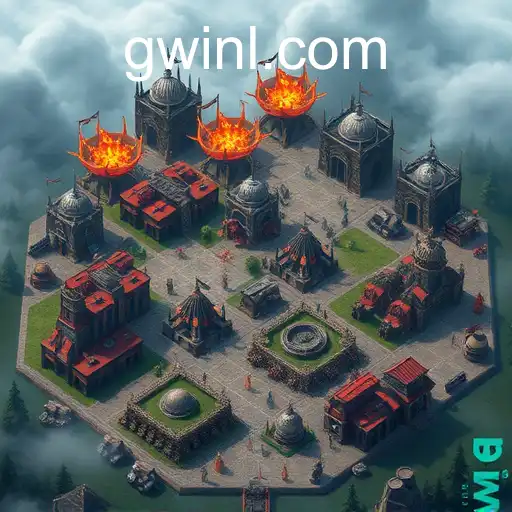
Strategy games have long captured the attention of gamers seeking mental challenges and tactical advancement. Within this captivating game category lies an intriguing element known as 'gwin.' While 'gwin' might seem like a mere keyword at first glance, it represents a significant concept that experienced players and game designers alike appreciate for its impact on a player's success.
The landscape of strategy games is vast, encompassing various sub-genres like real-time strategy (RTS) and turn-based strategy (TBS). Each demands a unique approach to decision-making, resource management, and sometimes includes controlling troops or resources on virtual fields of battle. Titles such as 'Civilization,' 'StarCraft,' and 'XCOM' have popularized strategic gameplay, earning legions of fans who revel in the art of thoughtful planning and competitive play.
At the heart of many strategy games is the emphasis on adaptability and foresight. With 'gwin' as a keyword, these games challenge players to maximize their strategic acumen to 'win' against opponents, often requiring them to master complex systems and multifaceted environments. The strategic decisions a player makes, often under pressure, determine their path to victory and highlight their ability to leverage a game's mechanics effectively.
Interestingly, the term 'gwin' itself may be interpreted as a blending of 'game' and 'win,' embodying the essence of triumphant strategic play. It's about achieving victory through one's wits, calculated maneuvers, and a deep understanding of the game's dynamics. In a sense, mastery of strategy games isn't just about winning individual matches but understanding the nuances of a game deeply enough to know when and how to deploy optimal strategies.
The educational value of strategy games shouldn't be underestimated. Studies suggest that these games can improve cognitive functions such as problem-solving skills, spatial awareness, and memory. Moreover, they often teach valuable lessons about patience, risk assessment, and long-term planning.
In conclusion, strategy games offer an intellectual playground where 'gwin' becomes more than just a metric for success but also a badge of honor for those who can consistently outthink and outmaneuver their rivals. As this genre continues to evolve with new technologies and design philosophies, it will remain a cornerstone of gaming culture for those who seek the thrill of strategic triumph and tactical glory.
